
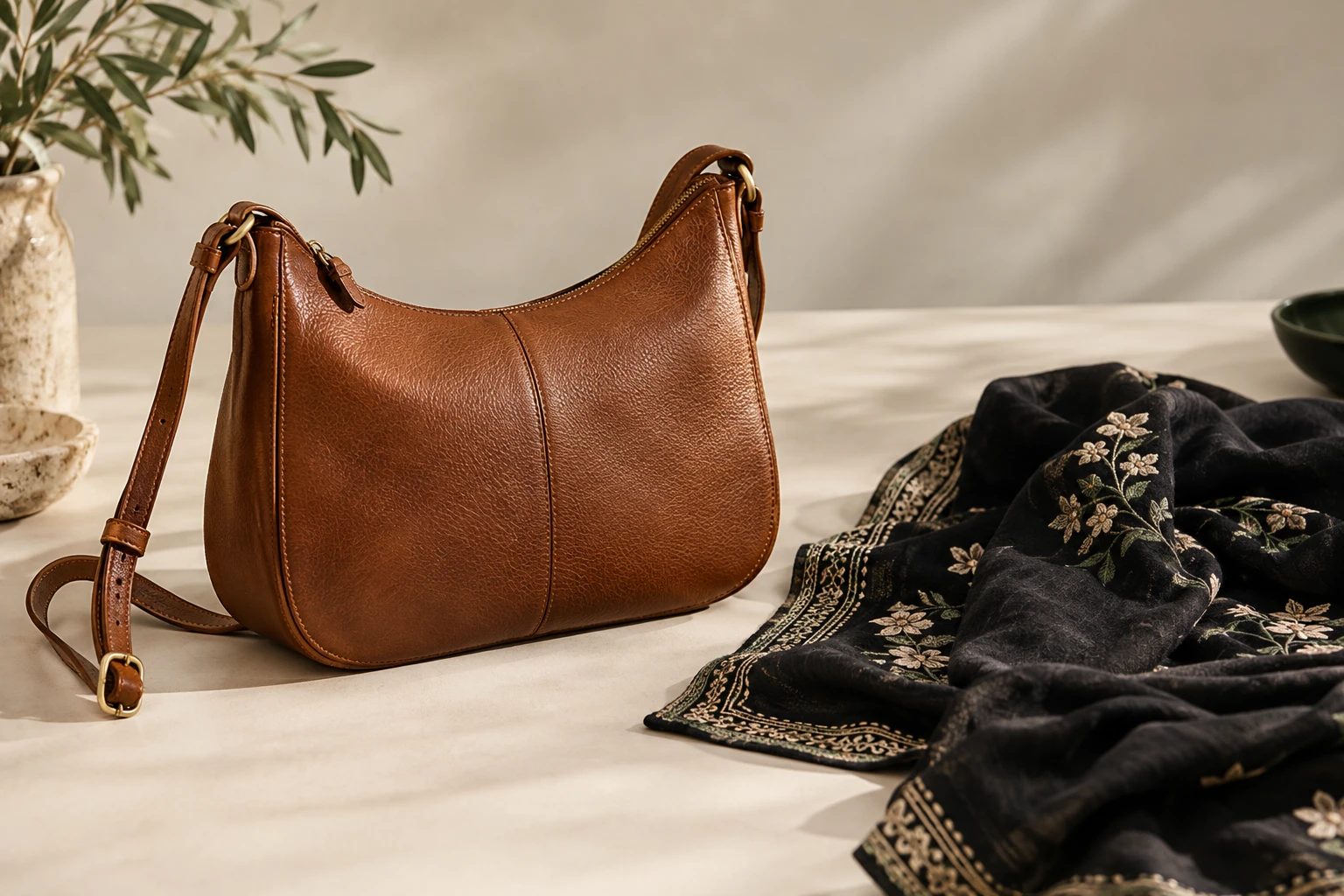
What ecommerce photo retouching includes
A retouching brief can cover background removal, color correction, dust cleanup, wrinkle smoothing, shadow creation, and ghost mannequin work. Specify which corrections you want rather than assuming every service includes them. A suitable provider for your business should demonstrate the finish you need without changing what customers will receive.
Define permitted corrections and protected details.
Separate distractions from product characteristics. You might permit removal of dust on a handbag while protecting its grain, stitching, hardware, and shape. For clothing, distinguish temporary styling creases from intentional folds or fabric texture.
Write those boundaries into the brief. If a mark could be either damage or a design feature, require the editor to flag it rather than guess. Keep an untouched source file available for comparison throughout review.
Evaluate texture, color, edges, and reflections.
Review returned images beside their sources, both enlarged and at the size shoppers will see. A polished image should not automatically pass if important details have disappeared. Use the same checks across every supplier:
- Texture: Check that knit, leather grain, brushed metal, and other surfaces retain their character.
- Color: Compare against your approved reference under consistent viewing conditions; flag unexplained shifts between views.
- Edges: Look for pale halos, jagged cutouts, missing straps, or clipped fabric fibers.
- Reflections: Check that cleanup preserves the intended material appearance rather than flattening every highlight.
- Product information: Confirm that labels, logos, seams, and small components remain intact and readable.
Check consistency across the batch.
Review all angles of one product together, then compare neighboring products in a collection. Agree rules for crop, scale, alignment, background, and shadow direction before production. Otherwise, individually acceptable images may still fail your catalog standard.
For example, ask whether every shoe should share a baseline and comparable visual size. For apparel, specify how front, back, and detail views should relate. Keep approved examples in a shared reference set, including exceptions that should not become the default treatment.
Assess approval, quality checks, and revisions.
Ask the provider to confirm the brief before editing starts and identify who approves exceptions. Request an explanation of its quality-control process: does someone other than the original editor check the work, and against which criteria?
Look for image-level comments, version history, named reviewers, and visible order status when assessing collaboration tools. Establish how corrections are submitted, which revisions are included, and when a request becomes additional work. Test these arrangements during the trial rather than accepting a feature list as proof.
Compare scope, price, turnaround, and files.
Give each ecommerce photo retouching service the same sample files and written scope. Ask for separate prices where simple cutouts and complex reconstruction require different treatment. Compare the complete quoted job, including revisions, rush charges, and any minimum order.
Define when turnaround begins: after upload, payment, brief approval, or file acceptance. Confirm whether delivery means the first edit or approved final files. Agree output dimensions, file format, color profile, transparency, naming, folder structure, and whether layered working files are required.
Match specialist work to the product.
For jewelry, request examples that preserve stone settings, metal contours, and controlled reflections. For footwear, inspect soles, laces, stitching, and contact shadows. For apparel, examine fabric texture, garment proportions, and ghost mannequin joins.
A retouching provider should show relevant category work, not just unrelated portfolio highlights. If a provider proposes AI-assisted editing or generated assets, agree where those methods are allowed. Keep creative scene generation separate from corrections that must preserve exact product details, and require human review of accuracy-sensitive areas.
Test volume without losing control.
When choosing a provider for high-volume fashion ecommerce, test more than editing speed. Ask how the team handles changing briefs, peak workloads, urgent exceptions, and corrections across related files. Require a named escalation route and an agreed delivery schedule.
A boutique brand might prioritize small mixed batches and close creative review. A larger fashion operation should also test repeatable specifications, batch tracking, and staged delivery. Evaluate automation by its results and oversight, not by the promise of speed alone.
Run a representative trial.
Select ordinary images alongside difficult materials, fine edges, and inconsistent source lighting. Include several views of the same item and request one realistic correction round. Record defects, review time, delivery performance, and final cost before deciding whether ecommerce product photo retouching services meet your needs.
Explore Rupato’s product retouching service and current trial offer. Confirm eligibility, included editing, credit and current terms before starting. Use representative images and an agreed brief to assess the workflow.
Keep a supplier evaluation checklist.
Before committing, ask each shortlisted provider:
- Which product details are protected, and how are ambiguous edits escalated?
- Can you match our approved references across angles and repeat batches?
- Who checks finished work independently before delivery?
- What does the quote include, and what triggers extra charges?
- How are revisions tracked, priced, and scheduled?
- Can you demonstrate our expected volume using the actual workflow?
Choose the supplier whose trial meets your standards with manageable review effort. A suitable high-volume fashion retouching partner is not simply the fastest or cheapest: it is the one you can trust to repeat an approved result.